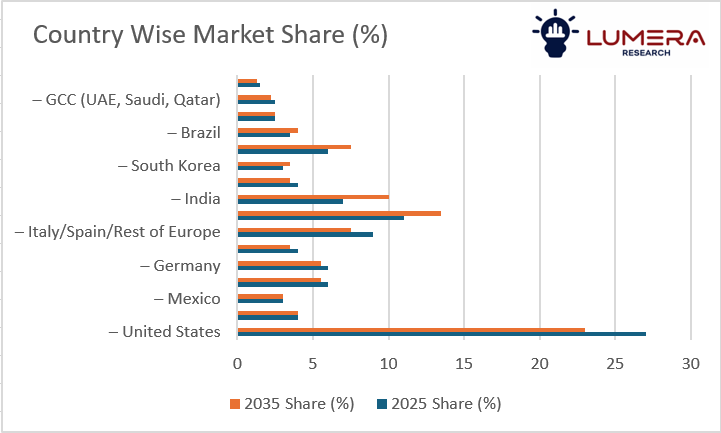
The global Substation Automation & Integration Market was valued at approximately USD 38.5 billion in 2025 and is projected to reach USD 78.0 billion by 2035, registering a compound annual growth rate (CAGR) of 7.3% during the forecast period.
Market growth is primarily driven by increasing investments in smart grid infrastructure, rising integration of renewable and distributed energy resources, and the need to enhance grid reliability, operational efficiency, and real-time monitoring capabilities across transmission and distribution networks. Utilities worldwide are transitioning from conventional substations to digital and automated substations to minimize outages, improve asset utilization, and enable predictive maintenance.
Substation automation and integration solutions combine intelligent electronic devices (IEDs), supervisory control and data acquisition (SCADA) systems, communication networks, and control and protection systems to enable centralized monitoring, control, and protection of electrical substations.
Market Segmentation Insights:
Component Insights:
The Intelligent Electronic Devices (IEDs) segment accounted for the largest share of the market in 2025. This dominance is attributed to widespread deployment of digital protection relays, monitoring devices, and control units that enable faster fault detection, isolation, and system restoration. Increasing adoption of IEC 61850 standards has further accelerated IED integration across both new and retrofit substation projects.
Type Insights:
Distribution substation automation dominated the market in 2025, supported by large-scale upgrades of aging distribution infrastructure and rising electrification across urban and semi-urban regions. Utilities are prioritizing distribution automation to reduce outage duration, improve power quality, and support distributed energy resources such as rooftop solar and electric vehicle charging infrastructure.
End-Use Insights:
The utilities segment represented the largest share of the market, driven by public and private investments in transmission and distribution infrastructure. Utility operators are adopting automation and integration solutions to improve grid resilience, reduce operational costs, and comply with evolving regulatory and reliability standards.
Substation Automation & Integration Market Dynamics:
Drivers:
- Increasing investments in smart grid and grid modernization initiatives.
- Rising penetration of renewable and distributed energy resources.
- Growing demand for real-time monitoring, automation, and predictive maintenance.
- Adoption of international interoperability and communication standards
Restraints:
- High upfront capital expenditure for automation and integration systems.
- Cybersecurity vulnerabilities associated with digital substations.
- Technical complexity in integrating legacy infrastructure
Opportunities:
- Expansion of digital substations in emerging economies.
- Increasing adoption of AI-based analytics for grid optimization.
- Modernization of aging transmission and distribution assets
Challenges:
- Interoperability issues across multi-vendor environments.
- Shortage of skilled workforce for advanced automation technologies
Regional Insights:
- Asia Pacific – dominated the global market in 2025, accounting for over 40% of total revenue, driven by rapid power infrastructure development, large-scale renewable energy deployment, and grid expansion initiatives in China, India, and Southeast Asia.
- North America – is expected to witness steady growth over the forecast period, supported by grid modernization programs, replacement of aging infrastructure, and strong adoption of advanced automation technologies.
- Europe – continues to demonstrate stable growth, driven by renewable energy integration mandates, digital substation investments, and stringent grid reliability regulations.
- Latin America and the Middle East & Africa – are projected to register moderate growth, supported by increasing electrification, utility modernization efforts, and infrastructure investments.
Competitive Landscape:
The market is moderately consolidated, with leading players focusing on digital substation solutions, long-term utility contracts, and product innovation. Key strategies include expansion of IEC 61850–based systems, cybersecurity enhancements, and integration of cloud and AI-driven analytics.
Key Companies Operating in the Market:
- Siemens Energy
- ABB Ltd.
- Schneider Electric
- General Electric (GE Grid Solutions)
- Hitachi Energy
- Eaton Corporation
- Mitsubishi Electric
- Toshiba Energy Systems
- Schweitzer Engineering Laboratories
- Larsen & Toubro
- Other regional and global players
Quick Market Figures:
- Market Size in 2025: USD 38.5 Billion
- Projected Market Size by 2035: USD 78.0 Billion
- CAGR (2025–2035): 7.3%
- Largest Regional Market: Asia Pacific