Global Smart Home Security Market Size, Share & Forecast 2026–2036 Report
Overview:
The Smart Home Security Market represents a rapidly expanding segment within the broader smart home and connected device ecosystem. Smart home security solutions integrate advanced technologies such as IoT-enabled sensors, AI-powered surveillance cameras, biometric authentication systems, motion detectors, and mobile-connected alarm systems to enhance residential safety and real-time monitoring capabilities. These systems enable homeowners to remotely monitor and control security functions through mobile applications, cloud platforms, and voice-enabled smart assistants.
Growing consumer awareness regarding residential safety, coupled with rising adoption of connected home technologies, is significantly accelerating the demand for smart home security solutions worldwide. In addition, increasing urbanization, expanding internet connectivity, and advancements in artificial intelligence and video analytics are transforming traditional home security systems into intelligent, automated protection platforms.
The market is witnessing strong growth driven by the increasing integration of AI-based threat detection, cloud-connected surveillance systems, and smart device interoperability. As smart homes become increasingly mainstream, security solutions are emerging as one of the most critical components of the connected home ecosystem, supporting real-time monitoring, automated alerts, and predictive threat detection.
Quick Market Figures:
- Base Year Market Size: USD 28.4 Billion
- Forecast Market Size: USD 93.6 Billion
- CAGR: 12.7%
- Leading Segment: Smart Surveillance Cameras
- Fastest-Growing Region: Asia Pacific
Leading Segment:
Smart Surveillance Cameras:
Smart surveillance cameras currently represent the leading segment within the smart home security market due to their widespread adoption across residential applications. These devices integrate advanced features such as high-definition video recording, AI-powered motion detection, facial recognition, night vision capabilities, and cloud-based video storage.
The growing demand for real-time monitoring and remote surveillance through smartphones has significantly increased consumer adoption of smart cameras. Additionally, advancements in AI-powered video analytics allow these systems to differentiate between humans, pets, vehicles, and suspicious activities, improving overall security effectiveness. The affordability and ease of installation of wireless smart cameras have further contributed to their dominant market position.
Market Drivers:
- Rapid growth in smart home adoption and connected household devices
- Increasing concerns regarding residential safety and property protection
- Rising integration of artificial intelligence and video analytics in surveillance systems
- Expanding penetration of high-speed internet and IoT connectivity
- Growing consumer demand for remote monitoring and mobile-based security control
- Increasing adoption of cloud-based security platforms and subscription services
Market Restraints:
- High installation and system integration costs for advanced security solutions
- Data privacy and cybersecurity concerns related to connected devices
- Compatibility issues between different smart home ecosystems
- Limited awareness in developing markets
- Risk of system vulnerabilities and hacking threats
Market Opportunities:
Integration of Artificial Intelligence and Predictive Security Analytics
AI-driven threat detection systems are transforming smart home security platforms by enabling predictive monitoring, automated threat identification, and real-time alert systems. Advanced AI algorithms can analyze behavioral patterns and detect unusual activities more effectively than traditional security systems.
Expansion in Emerging Smart City Markets
Rapid urbanization and smart city initiatives across regions such as Asia Pacific and the Middle East are creating strong demand for connected home infrastructure, including integrated security systems.
Strategic Partnerships with Smart Home Ecosystem Providers
Collaborations between smart home platform providers, telecommunications companies, and home automation firms are driving the development of fully integrated smart home ecosystems where security systems seamlessly interact with lighting, door locks, and home automation devices.
Regional Dynamics:
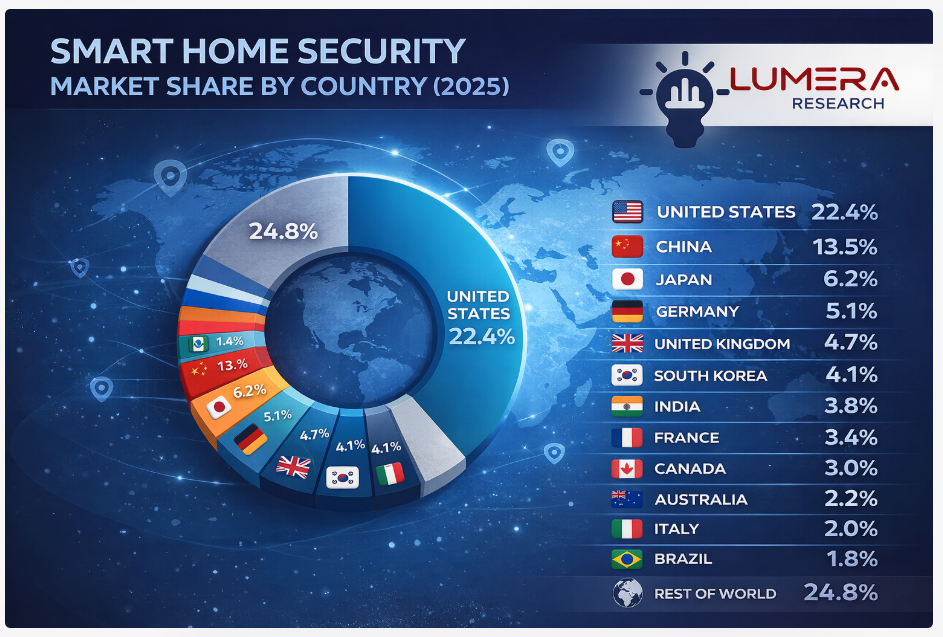
North America –
North America dominates the smart home security market due to the early adoption of connected home technologies and the strong presence of smart device manufacturers. High consumer awareness regarding residential security and widespread use of cloud-based monitoring services are driving demand across the United States and Canada.
Europe –
Europe represents a significant market driven by increasing adoption of smart home technologies and supportive regulatory frameworks promoting residential safety standards. Countries such as Germany, the United Kingdom, and France are witnessing growing demand for integrated home automation and security systems.
Asia Pacific –
Asia Pacific is expected to be the fastest-growing region in the smart home security market. Rapid urbanization, rising disposable incomes, and expanding smart city initiatives across China, India, Japan, and South Korea are fueling the adoption of connected home security solutions.
Latin America –
Latin America is gradually adopting smart home security technologies as increasing urban security concerns encourage households to invest in surveillance and monitoring systems.
Middle East & Africa –
The Middle East & Africa region is witnessing growing adoption of smart home security systems driven by rising investments in smart infrastructure and increasing residential developments across countries such as the UAE and Saudi Arabia.
Recent Industry Developments:
- Several smart home technology providers have launched AI-powered security cameras with advanced facial recognition and anomaly detection capabilities.
- Strategic collaborations between home automation companies and telecom operators are enabling integrated smart home security solutions bundled with broadband services.
- Manufacturers are introducing battery-powered wireless security systems that simplify installation and expand accessibility for residential consumers.
- Growing focus on privacy-first smart surveillance technologies is shaping new product development across the industry.
Key Companies (Representative List):
- Google Nest
- Amazon
- Ring
- ADT Inc.
- SimpliSafe
- Vivint Smart Home
- Honeywell International Inc.
- Johnson Controls
- Bosch Security Systems
- Samsung Electronics
Customization & Consulting Support:
Customized research and consulting services are available to support specific business intelligence and strategic planning requirements. These services enable organizations to gain deeper insights into regional market dynamics, competitive positioning, and emerging technology trends.
Available services include:
- Country-level market analysis
- Competitive benchmarking
- Technology landscape analysis
- Supply chain mapping
- Pricing analysis
- Go-to-market strategy advisory
Data Sources:
The Smart Home Security Market report is developed using a combination of Primary Research and Secondary Research methodologies to ensure comprehensive market intelligence.
Primary Research:
- Interviews with industry executives
- Discussions with device manufacturers and technology providers
- Consultations with smart home industry experts
Secondary Research:
- Company annual reports and financial filings
- Industry association publications
- Regulatory databases and policy documents
- Trade journals and technology research publications
Who This Report Is For:
- Manufacturers
- Technology Providers
- Investors
- Private Equity Firms
- Strategy Consultants
- Industry Stakeholders
Why Buy This Report:
- Detailed insights into the current size and future growth trajectory of the market
- Reliable market forecasts to support strategic business planning
- Comprehensive segmentation analysis identifying high-growth opportunities
- Competitive landscape assessment and company benchmarking
- Identification of emerging technological innovations and market trends
- Strategic intelligence for investors and industry participants
Explore more reports on: Lumera Research Report Store