Overview:
The global Property Technology (PropTech) market is expected to experience strong growth between 2026 and 2036, driven by rapid digitalization of real estate operations, rising adoption of smart building technologies, and increasing demand for data-driven property management and transaction platforms. The market is estimated to grow from USD ~38.0–42.0 billion in 2026 to approximately USD ~135.0–155.0 billion by 2036, registering a CAGR of ~13.0–14.5% during the forecast period.
PropTech refers to the application of digital technologies—such as cloud computing, AI, IoT, big data analytics, and blockchain—to improve efficiency, transparency, and user experience across the real estate value chain. From property search and transactions to asset management and smart infrastructure, PropTech solutions are reshaping residential, commercial, and industrial real estate markets globally.
Leading Segment:
Property Management & Smart Building Solutions
Property management and smart building solutions represent the leading segment in the global PropTech market. This segment dominates due to the growing need for operational efficiency, cost optimization, and real-time asset monitoring across residential and commercial properties.
The adoption of digital property management platforms enables landlords and facility managers to automate leasing, rent collection, maintenance scheduling, energy management, and tenant engagement. Additionally, the integration of IoT-enabled smart building systems enhances energy efficiency, security, and occupant comfort. As real estate owners increasingly focus on lifecycle cost reduction and sustainability, this segment continues to generate the largest share of PropTech revenues.
Market Drivers:
- Rising demand for digital transformation across real estate operations.
- Increasing adoption of smart buildings and IoT-based property solutions.
- Growth of urbanization and large-scale commercial infrastructure projects.
- Demand for transparency and efficiency in property transactions.
- Expansion of data analytics and AI-driven decision-making in real estate.
Market Restraints:
- High implementation costs for advanced PropTech solutions.
- Fragmented real estate regulations across regions.
- Data privacy and cybersecurity concerns.
- Resistance to technology adoption in traditional real estate markets.
Regional Dynamics:
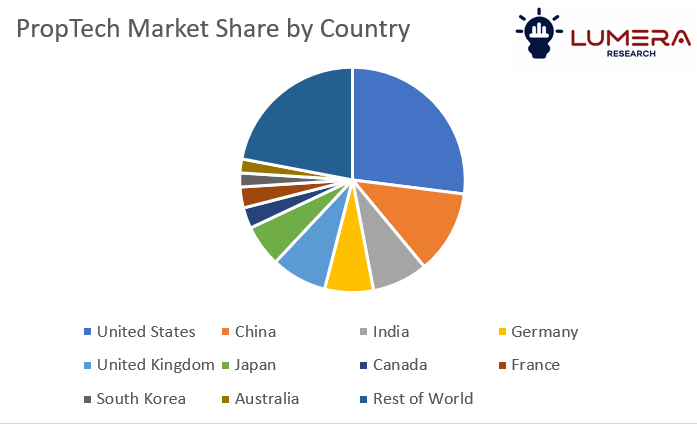
- North America – Largest market driven by early adoption of PropTech platforms, strong startup ecosystems, and high penetration of smart building technologies.
- Europe – Significant growth supported by sustainability initiatives, smart city programs, and digital property transaction platforms.
- Asia Pacific – Fastest-growing region due to rapid urbanization, infrastructure development, and increasing investment in smart real estate solutions.
- Latin America – Emerging adoption supported by digital property marketplaces and growing institutional real estate investment.
- Middle East & Africa – Growing opportunities driven by large-scale real estate developments, smart city projects, and government-led digital initiatives.
Quick Market Figures:
- 2026 Market Size (Estimated): ~USD 38.0–42.0 Billion
- 2036 Market Size (Projected): ~USD 135.0–155.0 Billion
- CAGR (2026–2036): ~13.0–14.5%
- Leading Segment: Property Management & Smart Building Solutions
- Fastest-Growing Region: Asia Pacific
Key Companies (Representative List):
- Zillow Group
- CoStar Group
- CBRE Group
- JLL Technologies
- Opendoor Technologies
- Redfin Corporation
- Compass
- AppFolio
- Yardi Systems
- RealPage
- Procore Technologies
- MRI Software
- VTS
- Buildium
- OpenRent