Overview:
The global Insoluble Dietary Fiber Market is expected to witness steady and sustained growth between 2026 and 2036, driven by rising awareness of digestive health, increasing prevalence of lifestyle-related disorders, and growing demand for functional food ingredients. Insoluble dietary fiber, commonly derived from sources such as wheat bran, cellulose, and various plant-based materials, plays a key role in improving bowel regularity, supporting gut health, and reducing the risk of metabolic diseases.
As consumers shift toward clean-label, plant-based, and fiber-enriched food products, food manufacturers are incorporating insoluble fiber into bakery products, cereals, snacks, beverages, and dietary supplements. The ingredient is also gaining traction in animal nutrition and pharmaceutical applications.
Leading Segment:
By Source – Wheat Bran-Based Insoluble Fiber
Wheat bran remains the dominant segment due to its widespread availability, cost efficiency, high fiber concentration, and established use in bakery and cereal applications. It is extensively used in bread, breakfast cereals, and digestive health products.
Additionally, cellulose-based fibers are gaining traction due to their neutral taste, high stability, and suitability for gluten-free and low-carb formulations.
Market Drivers:
- Rising prevalence of digestive disorders and constipation.
- Growing consumer awareness of gut health and microbiome balance.
- Increasing demand for functional and fortified foods.
- Expansion of plant-based and clean-label product offerings.
- Regulatory emphasis on recommended daily fiber intake.
Market Restraints:
- Taste and texture challenges in high-fiber formulations.
- Limited consumer awareness of insoluble vs. soluble fiber differences.
- Raw material price fluctuations.
- Regulatory restrictions on health claims in certain regions.
Opportunities:
- Development of fiber-enriched ready-to-eat foods and beverages.
- Integration in weight management and metabolic health products.
- Expansion in emerging economies with rising health awareness.
- Innovation in micro-milled and improved-texture fiber ingredients.
- Growth in pharmaceutical and nutraceutical applications.
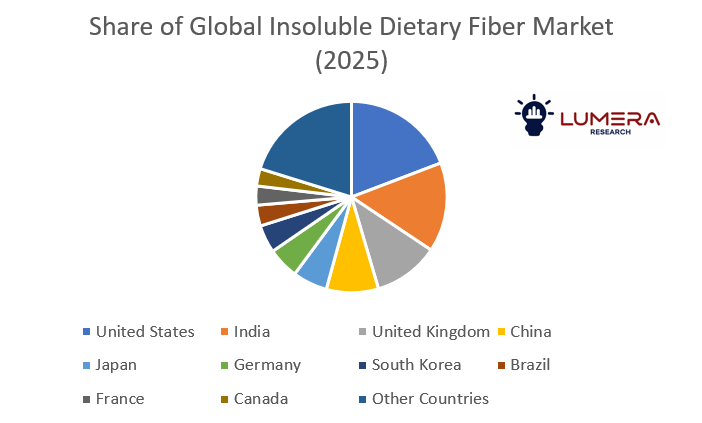
Regional Insights:
- North America: Largest market due to high consumption of functional foods, strong dietary supplement industry, and regulatory backing from agencies like the S. Food and Drug Administration supporting fiber labeling standards.
- Europe: Strong growth driven by increasing digestive health awareness and regulatory frameworks guided by the European Food Safety Authority. High demand for fiber-enriched bakery and cereal products supports regional expansion.
- Asia Pacific: Fastest-growing region due to urbanization, dietary transitions, and rising preventive healthcare awareness in countries like China, India, and Japan.
- Latin America: Emerging growth supported by expanding packaged food markets and rising middle-class health consciousness, particularly in Brazil and Mexico.
- Middle East & Africa: Gradual growth due to improving retail infrastructure and increasing awareness of digestive wellness in United Arab Emirates and South Africa.
Market Size & Growth Outlook:
- Market Size (2026): ~USD 4.5–5.2 Billion
- Market Size (2036): ~USD 8.8–10.5 Billion
- CAGR (2026–2036): ~6.5–8.0%
Growth is supported by increasing demand for functional foods, regulatory support for fiber intake recommendations, and expansion of fiber-fortified packaged food categories.
Key Companies (Representative List):
- Cargill
- Archer Daniels Midland Company
- Ingredion Incorporated
- Tate & Lyle
- Roquette
- DuPont
- SunOpta
- Beneo
- Lonza Group
- Kerry Group