Overview:
The global Climate Tech Market is expected to experience strong expansion during the forecast period, supported by accelerating climate regulations, large-scale capital deployment into clean technologies, and growing corporate commitments toward decarbonization and climate resilience.
The market was valued at approximately USD 780–820 billion in 2026 and is projected to reach USD 2.4–2.7 trillion by 2036, expanding at a CAGR of ~11.5–12.5%. Growth is driven by widespread adoption of renewable energy systems, electrification of transport, deployment of energy storage, and increasing investments in climate data and emissions management platforms.
Leading Segment:
Renewable Energy Technologies –
Renewable energy technologies represent the largest and leading segment within the global climate tech market, This segment’s dominance is driven by the rapid expansion of solar and wind power capacity, favourable government policies, and declining levelized cost of electricity (LCOE) across major economies.
Renewable energy continues to account for the highest share of climate tech investments due to its immediate impact on emissions reduction, proven commercial viability, and scalability across both developed and emerging markets. Large-scale utility projects, corporate power purchase agreements (PPAs), and grid-scale renewable deployments have further strengthened this segment’s market position.
Additionally, renewable energy technologies benefit from strong policy support in the form of tax credits, feed-in tariffs, renewable portfolio standards, and national decarbonization roadmaps. As a result, the segment remains the primary revenue contributor and foundation for downstream climate technologies such as energy storage, green hydrogen, and electric mobility.
Market Drivers:
- Global net-zero commitments and climate action policies.
- Accelerating deployment of renewable energy capacity worldwide.
- Rising climate-related risks across infrastructure and supply chains.
- Carbon pricing mechanisms and emissions regulations.
- Strong venture capital and institutional funding in climate innovation.
- Advancements in AI, IoT, and digital platforms for climate monitoring.
Market Restraints:
- High upfront capital investment requirements.
- Scalability challenges in developing and emerging economies.
- Regulatory fragmentation across regions.
- Long commercialization timelines for advanced climate technologies.
- Dependence on subsidies and incentives in early adoption phases.
Regional Dynamics:
- North America – Market leadership supported by strong clean energy investment, supportive policy frameworks, and rapid commercialization of climate technologies.
- Europe – Steady growth driven by stringent emissions targets, carbon pricing mechanisms, and aggressive renewable energy deployment.
- Asia Pacific – Fastest-growing regional market supported by industrial decarbonization efforts, renewable energy expansion, and climate adaptation initiatives.
- Latin America – Growth driven by renewable power generation, sustainable agriculture technologies, and water management solutions.
- Middle East & Africa – Emerging adoption supported by energy diversification initiatives and climate-resilient infrastructure investments.
Quick Market Figures:
- 2026 Market Size: ~USD 780–820 Billion
- 2036 Market Size (Projected): ~USD 2.4–2.7 Trillion
- CAGR (2026–2036): ~11.5–12.5%
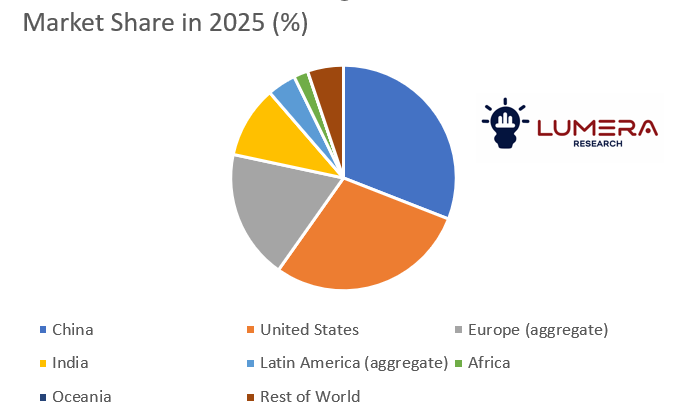
- Leading Region: Asia Pacific (~35–40% share by 2036)
Key Companies (Representative List):
- NextEra Energy
- Ørsted
- Vestas Wind Systems
- Tesla
- Schneider Electric
- Siemens Energy
- ABB
- Enphase Energy
- First Solar
- Brookfield Renewable Partners
- Iberdrola
- General Electric Vernova
- Johnson Controls
- Hitachi Energy
- Fluence Energy
- Bloom Energy
- Climeworks
- Carbon Engineering
- Sungrow Power Supply
- BYD Company