
Digital Borders: The Rise of the E-Passport Revolution
Global mobility is increasing rapidly. At the same time, governments are strengthening border security and digital identity frameworks.
The E-passport Market is projected to expand significantly between 2026 and 2036 as nations transition from traditional machine-readable passports to chip-enabled biometric passports. These electronic passports enhance security, reduce identity fraud, and accelerate border clearance processes.
As international travel recovers and digital identity ecosystems mature, e-passports are becoming a foundational component of modern border infrastructure.
According to the latest
👉 E-passport Market Size, Share & Forecast 2026–2036,
governments worldwide are accelerating smart border modernization programs to align with International Civil Aviation Organization (ICAO) standards.
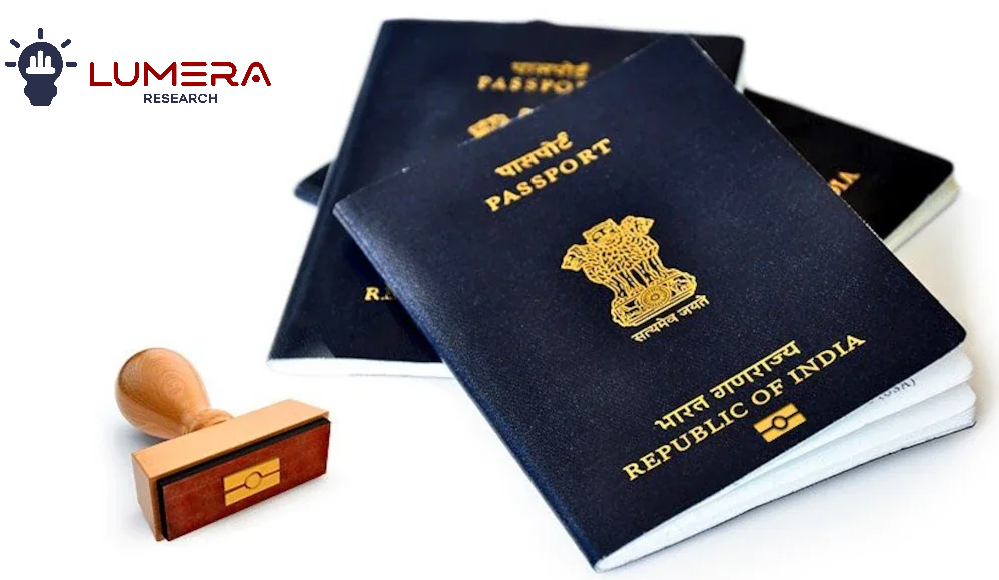
E-passport Market Growth Drivers
Several structural forces are strengthening the E-passport Market.
Rising Global Travel and Tourism
International travel volumes continue to grow steadily. Therefore, border authorities require faster and more secure identity verification systems. E-passports reduce processing time at airports and enable automated e-gate systems. As a result, immigration queues are shorter and operational efficiency improves.
Enhanced Security Requirements
Governments are prioritizing national security and anti-terrorism initiatives. Traditional passports are vulnerable to forgery. However, e-passports store encrypted biometric data within embedded secure chips. This hardware-based protection significantly reduces identity fraud risks. Consequently, security-driven adoption is accelerating the E-passport Market globally.
Advancements in Biometric Technology
Improvements in facial recognition, fingerprint scanning, and iris authentication are enhancing verification accuracy. Moreover, secure RFID-enabled chips and microcontrollers are improving durability and cryptographic protection. These technological advancements are strengthening the long-term outlook of the E-passport Market.
Government Digitization Programs
National digital identity initiatives and smart border strategies are expanding across emerging economies.
Countries in Asia Pacific, the Middle East, and Africa are upgrading passport infrastructure to meet ICAO compliance standards. Therefore, public sector digitization is becoming a key growth engine.
Emerging Trends in the E-passport Market (2026–2036)
The E-passport Market is evolving alongside broader digital border ecosystems. Key trends include:
- Facial recognition becoming the primary biometric identifier
- Contactless RFID-enabled secure chip integration
- Expansion of automated border control (ABC) systems
- Self-service e-gates and biometric kiosks
- Pilot initiatives integrating blockchain-based identity validation
- Adoption of eco-friendly and sustainable passport materials
Digital border ecosystems will continue shaping the E-passport Market throughout the forecast period.
For detailed segmentation insights and regional revenue forecasts, explore the comprehensive
👉 E-passport Market Analysis Report.
E-passport Market Regional Outlook
Europe
Europe remains a leading region due to early adoption and strict border security regulations across Schengen countries.
North America
North America demonstrates strong growth driven by biometric border control upgrades and immigration system modernization.
Asia Pacific
Asia Pacific is expected to record the fastest growth in the E-passport Market. Increasing outbound travel, large population bases, and digital ID adoption are fueling expansion.
Middle East and Africa
The Middle East and Africa are experiencing steady adoption due to smart city initiatives and national digitization programs.
Comprehensive projections and country-level insights are available in the full
👉 E-passport Market Forecast 2026–2036.
Challenges Facing the E-passport Market
Despite strong momentum, the E-passport Market faces several constraints:
- High implementation and infrastructure costs
- Data privacy and cybersecurity concerns
- Cross-border standardization complexities
- Risk of chip malfunction or technical failure
However, governments continue prioritizing secure digital identity systems.
According to the International Civil Aviation Organization (ICAO), biometric passport standards remain critical for ensuring global interoperability and border security alignment.
Competitive Landscape
The E-passport Market involves collaboration between governments and secure identity solution providers.
Key players include:
- Thales Group
- IDEMIA
- HID Global
- Gemalto
- Entrust
- Giesecke+Devrient
- CPI Card Group
- Mühlbauer Group
- Infineon Technologies
- NXP Semiconductors
These companies are investing in secure chip technologies, encryption protocols, and advanced biometric systems.
E-passport Market Forecast 2026–2036
The E-passport Market is forecast to expand steadily through 2036.
Growth will be supported by:
- Expansion of international travel corridors
- Modernization of national passport systems
- Increased airport automation investments
- Rising identity fraud prevention initiatives
- Integration with automated border control infrastructure
The E-passport Market is expected to register strong CAGR through 2036 as digital identity frameworks become central to national security strategies.
Frequently Asked Questions
What is the E-passport Market?
The E-passport Market includes electronic passports embedded with secure chips that store biometric data for identity verification.
Why is the E-passport Market growing?
The E-passport Market is expanding due to rising global travel, enhanced security requirements, and biometric technology advancements.
Which region leads the E-passport Market?
Europe currently leads adoption, while Asia Pacific is projected to record the fastest growth through 2036.
Conclusion
The E-passport Market is becoming a core pillar of global digital identity infrastructure.
Beyond improving travel convenience, electronic passports strengthen border security and support national digitization initiatives. As smart border ecosystems expand, governments and technology providers investing in secure biometric solutions will be best positioned to capitalize on long-term growth opportunities.
Explore our full collection of industry insights and forecasts in the Lumea Research Market Reports Store.